Summary:
Mid-sized brands scaling past $5M in ARR often mistake a complexity problem for a box problem. This guide breaks down seven ways fractional vendor sourcing quietly inflates costs, slows launches, and erodes brand consistency, and how consolidating dielines, materials, production, and logistics under one managed Packaging System fixes all seven at once.
Intro
For brands generating $5M to $50M in revenue, catalog expansion past 20 SKUs creates operational friction. Managing separate suppliers for outer shippers, rigid boxes, and inserts inevitably inflates dimensional (DIM) weight fees, disrupts fulfillment timelines, and causes visible brand decay across channels.
Packaging asset consolidation puts one team in charge of coordinating what used to be a handful of separate vendor relationships. Dielines, material specifications, direct-factory production, and co-packing all move under a single managed Packaging System.
Shifting from transactional box buying to an outsourced, full-service packaging department lowers total cost of ownership (TCO) while accelerating global speed-to-market. Operations leaders, supply chain managers, and founders should know seven things before scaling packaging the way they’ve scaled everything else.
Why Do Fractional Vendor Models Inflate Total Cost of Ownership?
Sourcing outer boxes from one vendor, rigid boxes from another, and custom inserts from a third looks efficient on paper. While individual quotes may look competitive, fractional supply chains introduce hidden operational drag: duplicated tooling die fees, uncoordinated freight runs instead of consolidated shipments, and another set of purchase orders for your team to reconcile.
Each of those fractional vendors also comes with its own Minimum Order Quantity (MOQ), and three separate thresholds don’t average out to one reasonable number. Brands are forced to purchase at the highest MOQ to secure pricing. This ties up working capital in excess safety stock that clogs warehouse floors for months.
Consolidating volume across every SKU under a single Packaging System changes that math. Purchasing moves into higher discount tiers, redundant tooling setups disappear, and total cost of ownership drops.
Why Does SKU Proliferation Demand Modular Structural Architecture?
Designing custom packaging for every new product launch creates severe structural inefficiency. When catalog expansion occurs without centralized guidelines, a 50-product catalog ends up needing 50 different shipper sizes, or what packaging engineers call dieline bloat.
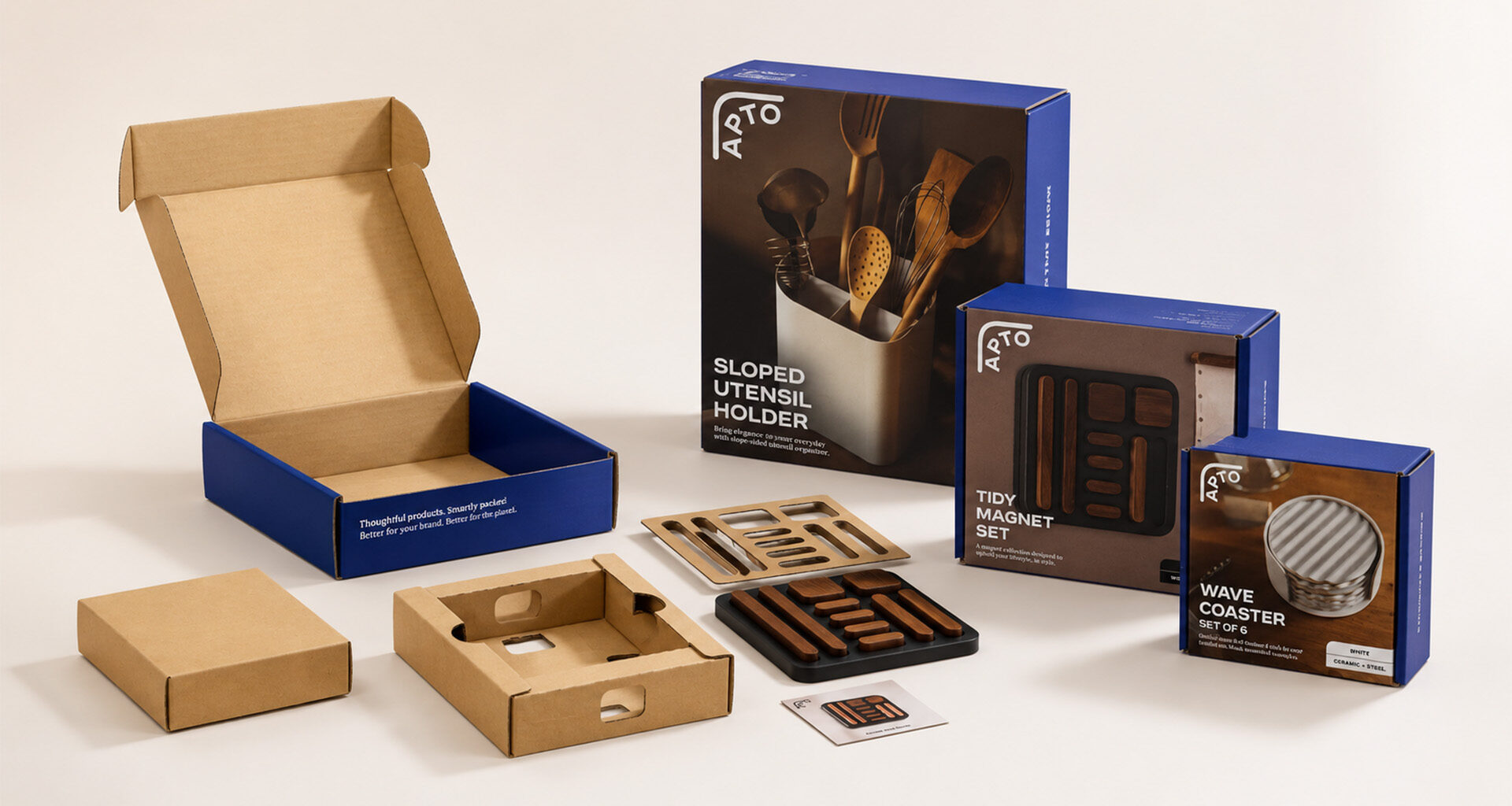
The fix is grouping products by similar dimensions: items with comparable footprints can share the same outer box. Three or four master outer box sizes, combined with modular, SKU-specific inner trays or paper inserts, can comfortably serve a catalog of 30 or more SKUs.
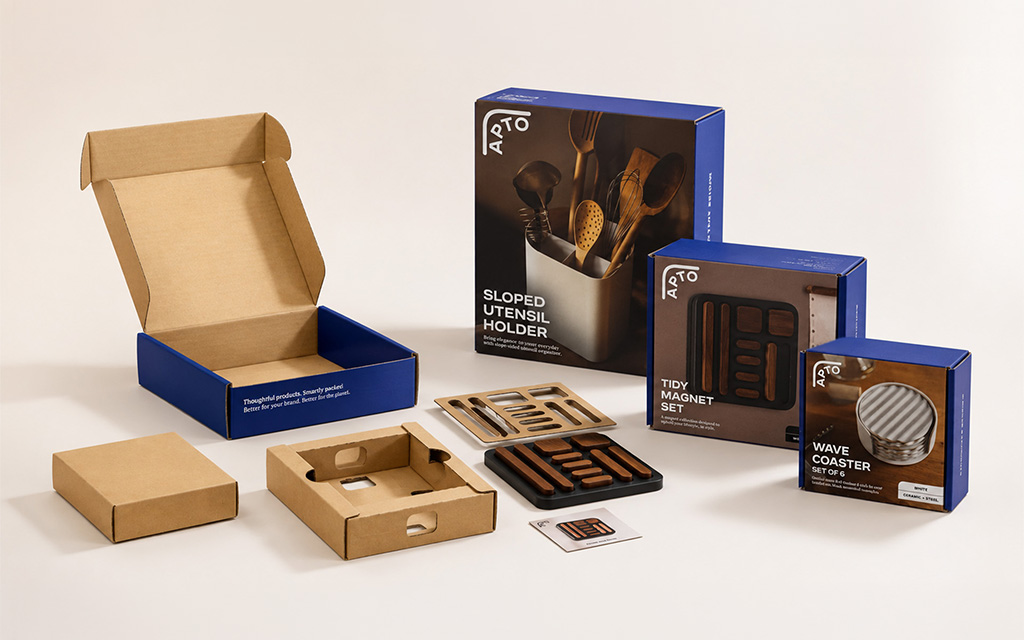
Without structural standardization, fulfillment teams often ship smaller items in oversized boxes packed with void fill. Carrier dimensional (DIM) weight penalties are calculated from a box’s outer dimensions, making precise box-and-insert sizing essential. Eliminating excess void space removes the need for extra padding and immediately reduces per-parcel shipping costs.
A structural dieline audit is the starting point: replacing single-use custom boxes with a scalable, nested packaging framework engineered to grow alongside your product catalog.
How Do Centralized Master Specs Libraries Prevent Visual Brand Decay?
Factories that aren’t working from the same playbook don’t stay in sync for long. Pantone shades drift between production runs. Paperboard shifts in weight or texture from one batch to the next. And structural tolerances don’t quite line up when two boxes end up sitting side by side.
Zenpack builds a master specification library for the brand, starting with the substrate itself: specific GSM weights, FSC-certified paperboard, tight Pantone tolerances, and precise coating specs like soft-touch versus aqueous finishes.
Factory-level printing must meet the same bar. G7 Certified Color printing is required across Zenpack’s network, backed by a second check: physical Limit Samples that mathematically define the lightest and darkest shades still acceptable for a given production run. Pre-shipment inspections catch non-conforming batches at the factory floor before products reach distribution channels.
Premium hair-tool brand T3 Micro experienced catalog inconsistency across multiple suppliers: print colors drifted off-target, paper quality varied between boxes, and gold foil logos failed to align. Zenpack consolidated T3’s paper sourcing and tested nine different shades of red against the brand’s own red hairdryer until the packaging matched the product. Next, a dedicated jig kept the gold foil logo registering correctly on every run.
By locking master specifications, T3 Micro achieved 100% global brand consistency while reducing total packaging spend by 20%. Centralized spec governance ensures brand integrity remains independent of manufacturing location or production date.

How Does Systemic Validation Eliminate Line Jams and Freight Damage?
Transactional print suppliers manufacture packaging directly from artwork PDFs without evaluating structural performance under real-world logistics stress. This lack of testing routinely results in damaged inventory and stalled fulfillment operations.
Systemic validation solves this by testing material strength before mass production. Edge Crush Test (ECT) and Box Compression Test (BCT) ratings ensure corrugated walls withstand multi-tier stacking. Certified ISTA vibration and drop testing simulates real-world transit stress to prevent freight damage before mass manufacturing.
Before any tooling is cut, the design undergoes physical validation. An unprinted structural white sample confirms material integrity and box fit before printing a single unit. A precision-cut 3D prototype, produced on ESKO Kongsberg X22 tables, then runs through automated folding trials to catch anything that would jam an automated fulfillment line.
Validating structural mechanics during prototyping prevents freight damage on the road and expensive downtime at the fulfillment center.
How Does Integrated Logistics Solve Warehousing Bottlenecks?
Disjointed delivery schedules from multiple suppliers clog warehouse floors. When structural components arrive weeks apart, fulfillment stalls while partial shipments consume valuable storage space waiting on delayed inventory.
Zenpack solves this by keeping production and consolidation in the same region: with its own distribution centers across North America, China, and Taiwan, plus warehousing and fulfillment partners across Southeast Asia, components can converge at a facility near where they’re actually made, instead of shipping across the world first.
Furthermore, Zenpack’s JIT (just-in-time) delivery, custom kitting, and 3PL repackaging into a single managed pipeline remove friction. Rather than coordinating separate vendors for storage, freight, and assembly, brands operate under a single logistics team.
For brands selling across retail and Amazon FBA, this integrated approach optimizes import staging and negotiated storage terms—slashing inventory holding fees and clearing fulfillment delays at the source.

How Do Plug-and-Play Dieline Frameworks Accelerate Time-to-Market?
Building a custom dieline from scratch for every new product launch takes 2 to 3 months. Each one needs its own round of CAD reviews, physical samples, and approvals, and the launch date slips right along with that timeline.
Pre-engineered, modular dieline libraries solve this bottleneck. Zenpack’s design teams apply new artwork to validated structural templates, cutting onboarding timelines for new products from months to days.
For a brand adding SKUs regularly, this agility matters as much as the cost savings. A plug-and-play dieline framework lets the catalog keep growing without the packaging becoming the reason launches slip.
Why Does Single-Source Accountability Beat Vendor Finger-Pointing?
When packaging fails in transit, multi-vendor supply chains instantly trigger liability shifting. Managing separate design agencies, brokers, and regional factories burns up to 30% of an operations team’s bandwidth, with no vendor taking ownership when issues arise.
Zenpack removes that ambiguity by managing five core disciplines under one roof: strategy, materials, prototyping, factory production, and logistics.
Single-source integration assigns end-to-end responsibility to one dedicated team. From initial structural concept through to final fulfillment, you gain absolute operational clarity and a single point of accountability for your entire packaging pipeline.
How Do Brands Actually Move Past Piecemeal Packaging?
Scaling past $5M in ARR requires moving away from piecemeal box purchasing. Resolving catalog complexity rarely comes down to adding one more vendor to an already fragmented mix, or negotiating a better MOQ within it. Real consolidation requires a structural shift: replacing that mix with a single team spanning strategy, structural engineering, factory production, and logistics under one managed Packaging System. Brands that make this shift early spend less time chasing down vendors and more time actually scaling their catalog.
Ready to Consolidate Your Packaging With Zenpack?
Zenpack is a full-service packaging agency that manages dielines, materials, prototyping, production, and logistics together, so packaging becomes the growth engine it should be, not the operational bottleneck holding the catalog back.
FAQ
Packaging Asset Consolidation is an operational redesign, not a supplier swap. It unifies dielines, material specifications, direct-factory production, and co-packing under one managed Packaging System, replacing the patchwork of fractional vendors that most brands default to once their SKU count grows past 20.
The sticker price on each vendor’s quote is only part of it. Duplicate tooling die fees, overlapping freight lanes, extra purchase orders to reconcile, and inventory padded out to meet three different MOQs all add up. All of it disappears once volume consolidates under a single Packaging System.
Dieline bloat happens when every new product launch gets its own one-off box, decided in isolation from the rest of the catalog. A line of 50 products can end up needing 50 different shipper sizes. Beyond the tooling costs, oversized boxes padded with loose fill also trigger dimensional (DIM) weight penalties. Grouping products into 3-4 master box sizes with modular, SKU-specific inserts fixes both problems at once.
Zenpack builds a master specification library that locks down substrate choices, Pantone tolerances, and coating specs for the brand, then requires G7 Certified Color printing across its factory network. Physical Limit Samples define the lightest and darkest acceptable shade for each production run, and every batch is checked against them before it leaves the factory. T3 Micro used this system to launch new SKUs globally with 100% brand consistency intact.
Start by mapping out the fragmented vendor relationships, tooling, and dieline variants a catalog has accumulated, then replace that mix with a single team spanning strategy, structural engineering, factory production, and logistics under one managed Packaging System. Brands that make this shift early spend less time chasing down vendors and more time actually scaling their catalog.