
Summary:
D2C packaging that delights customers at home often fails on a retail shelf, triggering chargebacks, transit damage, and lost sales. This guide breaks down why shelf-ready packaging demands different structural engineering, with real cases from VSSL, Jinx Drinx, and cannabis compliance — and how Zenpack helps brands make the jump without losing the identity that got them noticed.
Why Won’t Your D2C Packaging Survive a Retail Shelf?
Most D2C brands assume the box that worked on an e-commerce delivery will work just as well on an offline retail shelf. It rarely does.
E-commerce packaging is built for a single purpose: protecting one item on a direct trip to a single doorstep. Physical retail runs on a different set of rules. The packaging at the bottom of a pallet carries weight, shelf dimensions leave no room for error, and shoppers have only seconds to notice a product on a crowded shelf.
When brands force their online packaging into physical stores, three costly setbacks usually follow:
- Retail chargebacks: compliance penalties for packaging that doesn’t meet a retailer’s sizing or durability standards.
- In-transit damage: primary packaging built for a single shipment giving way under the stress of mass distribution.
- Dead shelf velocity: shelf-ready packaging (SRP) that buries product cues or slows down stockers, suppressing sales before a customer ever sees the product.
Zenpack solves this through structural packaging engineering. We redesign primary and secondary packaging together to support supply-chain survival and SRP compliance, while preserving the core brand identity that attracted your audience in the first place.
What Makes Packaging Actually “Shelf-Ready”?
True Shelf-Ready Packaging (SRP) adheres to the five core industry standards: it must be easy to identify, open, shelve, shop, and dispose of.
Each requirement serves a different stakeholder in the retail ecosystem. A stocker opens it and shelves it; a shopper identifies it and grabs it; and the store eventually breaks it down for recycling. If your packaging fails any single step, it creates friction on the sales floor.
This is where D2C brands usually get tripped up. They treat retail packaging as a scaled-up version of their online shipper.
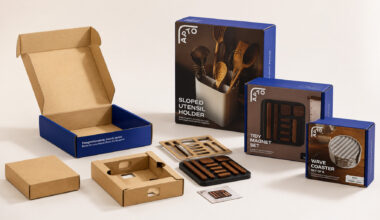
D2C Packaging: Built around individual unit protection using corrugated shippers, custom void fill, and unboxing reveals designed for a single doorstep.
Shelf-Ready Packaging: Built for pallet density and floor efficiency using precision tear lines, tray-and-hood mechanics, and structural pack-outs that resist sagging under weight.
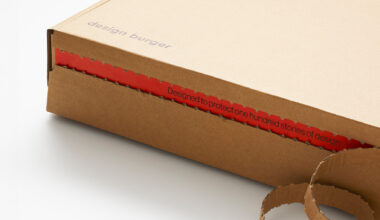
Of the three SRP features, the hardest part to engineer is the tear line. It has to stay structurally intact through transit, surviving vibration, compression, and handling, yet shear cleanly on the retail floor without tools, jagged edges, or destroyed branding.

What’s Actually Causing Damage in Transit?
Primary containers, such as glass bottles, delicate pump caps, and custom geometric jars, face extreme top-load crushing when stacked several pallets high.
The danger isn’t just static weight; it’s how unevenly that weight lands. A rectangular case spreads pressure evenly across its surface; a bottle with a narrow neck, or any irregular shape, concentrates that same weight onto one small point, and that’s where the structure gives way first.
To survive mass transit, secondary packaging must act as an outer skeleton. Through precise structural engineering, three core features absorb and redirect these forces before they ever reach the primary product:
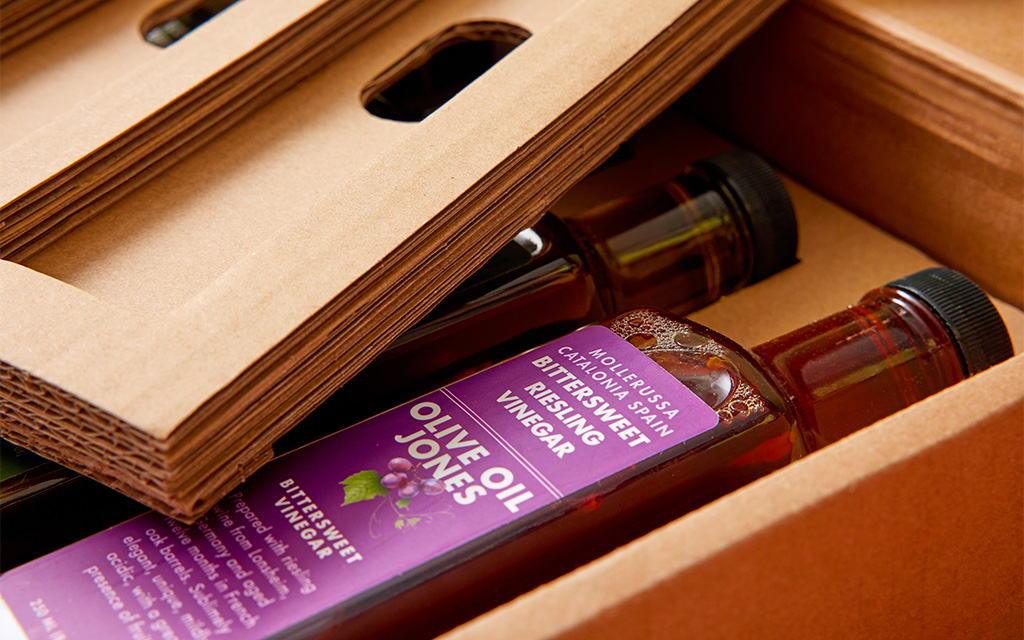
- Tailored internal inserts: Molded fiber trays or tailored paperboard partitions built into the secondary case, hold each primary container in place and absorb shock before it ever reaches the container itself.
- Locking mechanisms: Internal geometry within the secondary box transfers vertical weight away from vulnerable components, such as pump mechanisms or fragile neck.
- Edge crush test (ECT) rating and burst strength: On the secondary case itself are optimized for high-density stackability, so the case doesn’t give way before the truck even leaves the dock.
How Did VSSL Solve Its Retail Identity Crisis?
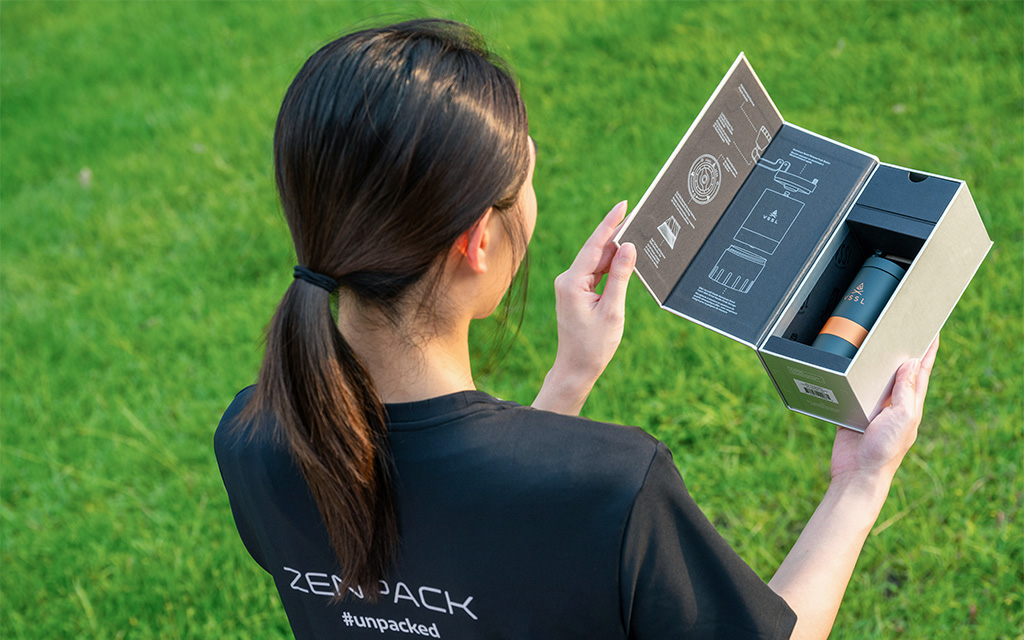
VSSL makes outdoor coffee gear built to survive the trail: grinders, brewers, tumblers. As the brand expanded into physical retail, its original packaging ran into an identity crisis.
The original packaging was fully enclosed, shoppers couldn’t see or touch the product. On a crowded shelf, shoppers had only the minimalist gold-foil line drawings on the exterior to judge by. The sleek cylindrical packaging looked more like high-end camera lenses or consumer electronics than outdoor gear.
To solve this, Zenpack shifted VSSL’s packaging strategy from total enclosure to tactile exposure:
- Open-Panel Cutouts: A structured front cutout on flagship gear exposes the brushed stainless steel directly, framed by signature matte silver paperboard for high-contrast branding.
- Minimalist belly band: On the Rift Tumblers, it wraps only the middle of the product, leaving the top and bottom fully exposed.
- Touch-and-feel windows: Across the accessories line offer small cutouts that let customers feel the material without unboxing anything.
Moving to an open-panel structure created a unique engineering challenge: removing the outer lid eliminated the main barrier holding heavy metal components inside the box during shipping. Rather than relying on conventional foam or friction-fit inserts, which feel cheap on a product this premium, Zenpack engineered custom magnetic embedded inserts that hold each heavy metal product securely on both its top and bottom. Zenpack calibrated the magnet strength to survive transit shock, but tuned so opening the package feels satisfying and premium.
What Kind of Structural Problems Need a Fully Custom Solution?
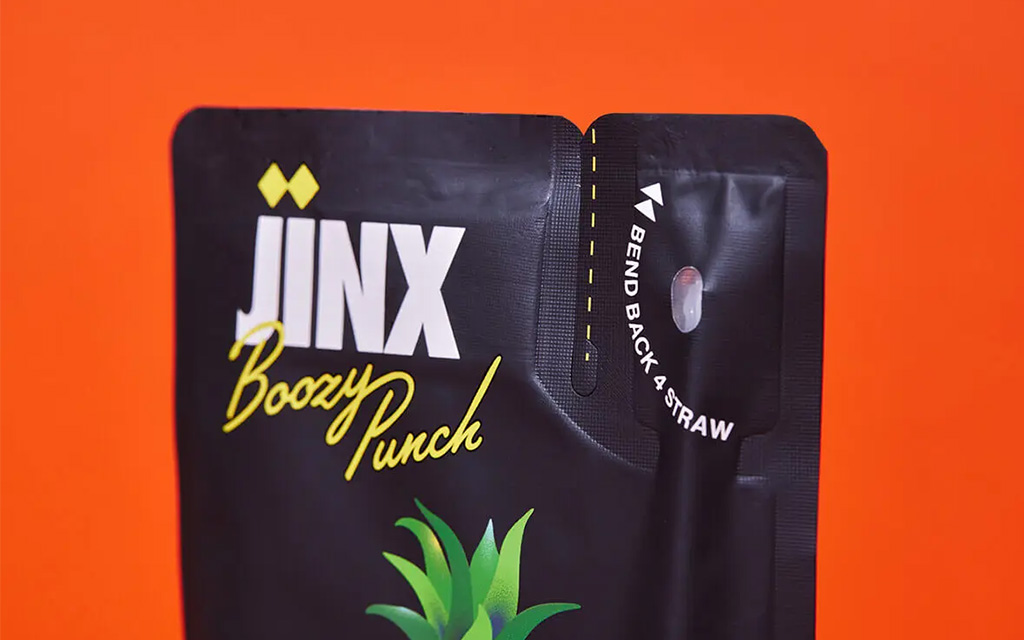
When Jinx Drinx co-founders Maddie Largey and Colin Michael set out to create a tamper-proof beverage pouch for the nightlife market, existing options fell short. They needed a single-use flexible pouch structure that made physical interference or spiking instantly visible.
Zenpack built the safeguard directly into the pouch structure: A tab hides the embedded straw, held in place by an internal channel. Bending the tab breaks a puncture surface at the straw’s tip to release it. Once bent, the tab cannot fold back into its original shape, ensuring any attempt to swap or spike the drink leaves an irreversible mark. Getting the mechanism right took a year and a half of iteration. The PP/PE and aluminum laminate had to be thin enough right at the puncture point for the straw to break through cleanly with a bend, but strong enough everywhere else to survive normal handling.
Ownership was a separate issue. Large pouch manufacturers were often reluctant to hand over full IP rights to a client when their own team had contributed to the design; Zenpack made clear from the start that Jinx Drinx would keep complete ownership. It’s a structure that’s genuinely theirs, not something a rival can request from the same factory.
Highly regulated categories like cannabis face structural packaging constraints that standard retail products rarely encounter. Child-resistant (CR) mandates often force brands into bulky plastic canisters or awkward locking slides that frustrate adult consumers and cheapen brand perception.
Safety compliance doesn’t have to ruin the unboxing experience. To bridge the gap between strict CR regulations and luxury paperboard packaging, Zenpack engineered a proprietary, multi-step opening sequence:
- Intuitive Dual-Locking Mechanics: A two-part release action engineered to leverage adult dexterity—remaining easy for legal consumers to open while thoroughly passing child-resistant testing protocols.
- Uncompromised Design Canvas: By embedding the mechanical lock and regulatory warning graphics in a dedicated, fixed structural zone, the primary surfaces remain clear for high-finish branding, tactile foils, and custom artwork.
- Sustainable Rigidity: Replacing bulky plastic enclosures with dense, paperboard-based rigid structures provides the weight, tactile feel, and premium protection required for high-end retail shelves, all while meeting compliance rules.
When regulatory rules threaten to compromise your packaging aesthetic, ground-up structural engineering ensures safety mechanisms enhance the user experience rather than derail it.

How Do Brands Actually Make the Jump From D2C to Retail-Ready?
Landing that first retail order is a milestone, but surviving mass distribution requires operational foresight. Redesigning one SKU’s box only after a retailer fines you for it isn’t a fix.
Real shelf-readiness requires a structural shift. That means engineering primary and secondary packaging together for the density, durability, and shelf presence retail actually demands. Brands that make this shift before it’s forced on them spend less time firefighting compliance issues and more time actually growing their retail footprint.
Ready to Build Shelf-Ready Packaging With Zenpack?
One structural engineering team handles primary containment, secondary case durability, and real-world transit testing together, so your packaging survives the jump from D2C to retail without the costly redesign cycle.
Bring Zenpack in before the next retail setback forces a redesign.
FAQ
Shelf-ready packaging (SRP) is packaging engineered to be easy to identify, open, shelve, shop, and dispose of. It’s built for high-density pallet distribution rather than a single online shipment. It relies on structural features like tray-and-hood construction and precision tear-lines that stay intact through transit but open cleanly on the retail floor.
D2C packaging is built for one unit reaching one doorstep, using corrugated shippers and heavy void fill. Retail packaging has to survive pallet stacking, meet a retailer’s strict dimensional tolerances, and catch a shopper’s attention in seconds. None of that is what D2C packaging is engineered to do.
Primary containers with irregular shapes, like bottles with narrow necks or pump caps, concentrate weight onto a single point when stacked pallets-deep, which is exactly where the structure gives way first. Engineered inserts, locking mechanisms, and a properly rated secondary case absorb that load instead.
Yes. Zenpack’s case studies, from VSSL’s magnetic open-panel packaging to Jinx Drinx’s tamper-evident, IP-protected pouch, show that structural engineering and brand identity don’t have to trade off against each other; the redesign process can protect a signature mechanism and shelf presence at the same time.